
Agile vs Fixed Process –
Choosing the Right
Development Approach for
Your Business
Introduction
When Indian business owners decide to build or revamp a website, one of the most confusing choices they face is which development approach to adopt. Should you go with the structured, step-by-step fixed process (often called Waterfall), or the more flexible, iterative Agile methodology?
Both approaches have their merits, but choosing the wrong one can cost you time, money, and even business opportunities. In today’s fast-paced world of automation, AI, and rapidly changing consumer expectations, this decision is more strategic than technical.
Let’s break down what each approach means, their pros and cons, and how to choose the one that best fits your business.
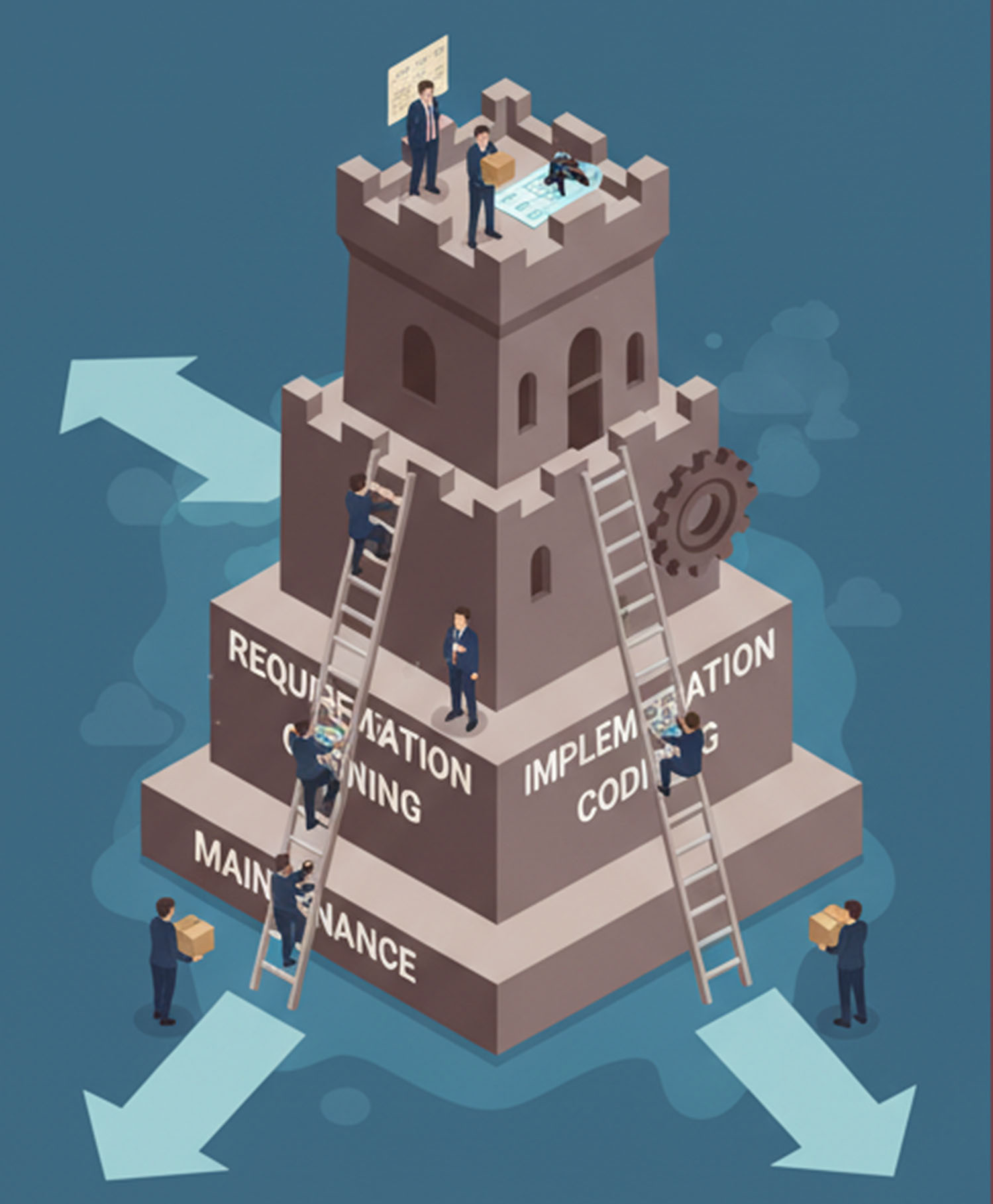
The Fixed (Waterfall) Process
The fixed process follows a linear, step-by-step model. Each stage—discovery, planning, design, development, testing, deployment—is completed before the next begins.
Benefits:
Predictable costs and timelines: Since everything is planned upfront, you know exactly what you’ll spend and when you’ll launch.
Best for clear requirements: If your website’s scope is fixed (e.g., corporate site, product catalog), this approach works well.
Easier for stakeholders: Business owners get a clear project plan with milestones and deliverables.
Limitations:
Rigid: If your requirements change midway, the cost and time will skyrocket.
Delayed feedback:
You often don’t see the final product until late in the cycle.
Risk of outdated solutions: In fast-changing markets, what was planned six months ago may not be relevant at launch.
The Agile Process
The Agile approach is iterative and flexible. Work is divided into “sprints” (usually 2–4 weeks). At the end of each sprint, you see a working version of the website or feature.
Benefits:
Flexibility: Perfect if your goals, market, or customer needs may evolve during development.
Continuous feedback: Business owners see progress regularly and can course-correct early.
Faster value delivery: Core features can go live quickly, while additional features are built over time.
Future-proof: Agile adapts well to AI tools, automation, and changing digital trends.
Limitations:
Less predictable costs: Budgets may expand if scope changes significantly.
Stakeholder involvement needed: Business owners must actively participate in reviews and feedback.
Challenging for fixed deadlines: If you need everything done by a hard date, Agile may feel too fluid.
| Factor | Fixed Process (Waterfall) | Agile Process |
|---|---|---|
| Budget | Predictable, upfront | Flexible, may expand |
| Timeline | Defined, but inflexible | Iterative, adaptable |
| Scope of Work | Fixed, pre-defined | Evolving, adaptable |
| Client Involvement | Minimal (after kickoff) | High (ongoing feedback) |
| Best For | SMEs with clear needs (corporate websites, static product sites) | Startups, SaaS, EdTech platforms needing rapid iteration |
| Risk Level | Higher if requirements change later | Lower, as issues are spotted earlier |
Which Approach Should Indian Businesses Choose?
1. Startups & SaaS Companies
Recommended: Agile.
Reason: SaaS platforms and startups often evolve rapidly. Features may need to change based on user feedback, competitors, or funding requirements. Agile gives you the flexibility to adapt.
2. EdTech Companies
Recommended: Agile.
Reason: Student needs, regulations, and tech evolve quickly. Iterative sprints allow you to launch basic features (e.g., student dashboard, payments) and then expand (AI tutors, gamification).
3. IT Services Firms / SMEs
Recommended: Fixed or Hybrid
Reason: If you need a corporate website to showcase services and credibility, a fixed process ensures predictability. However, a hybrid approach—fixed for core structure, agile for marketing sections like blogs—works best.
The Hybrid Approach: Best of Both Worlds
Many Indian businesses find success with a hybrid approach:
* Use fixed processes for foundational needs (corporate site, compliance, security).
* Apply Agile for customer-facing or experimental features (lead-gen funnels, dashboards, integrations).
This reduces risk while keeping room for innovation.
The Business Value of Choosing Right
Cost Efficiency: Prevents overspending on rework.
Time-to-Market: Ensures you launch when your customers need you, not months later.
Customer Satisfaction: Agile helps you align with user feedback; fixed ensures stability.
Long-Term ROI: The right process ensures your website evolves with your business, instead of holding it back.
Conclusion
There’s no “one-size-fits-all” in website development. Agile is not automatically better, and Fixed is not automatically outdated. The right choice depends on your business goals, industry, budget, and growth stage.
For Indian SMEs and startups, the website is not just a digital presence—it’s the backbone of growth in an era of AI and automation. Choosing the right development process is a strategic business decision that directly impacts ROI, conversions, and brand credibility.
At Heliosys Technologies, we help businesses choose and implement the right approach—whether Fixed, Agile, or Hybrid—so your website is not just built, but built for growth.
Not sure which process suits your business? Talk to our team today.


